
Choosing contact center software is no longer just about finding a system that can receive and distribute phone calls. Businesses now need to manage customer conversations across voice, WhatsApp, email, live chat and other digital channels while keeping track of agent performance and service quality.
For Nigerian businesses, the decision involves additional considerations. These include local telephone number support, international calling costs, internet reliability, data protection, integration with existing business systems and access to technical support.
This guide compares 15 contact center software solutions in 2026. It covers international platforms and providers with contact center services in Nigeria, helping businesses understand their options before requesting a demonstration or quotation.
What Is Contact Center Software?
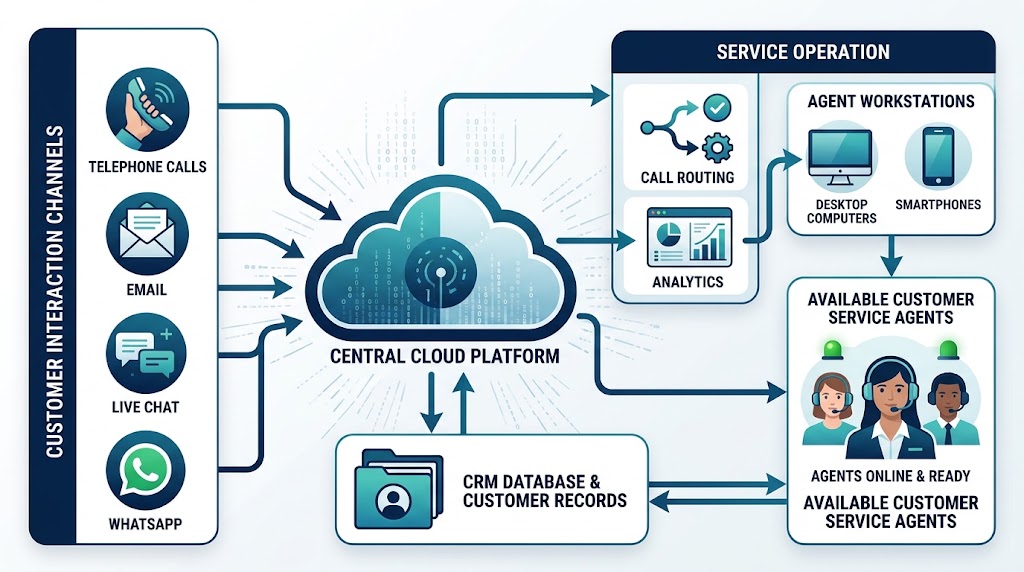
Contact center software is a technology platform that helps businesses manage customer interactions across different communication channels. It allows customer service teams to receive, route, monitor and respond to enquiries from a central system.
Unlike traditional call centre software, which focuses mainly on telephone conversations, modern contact center platforms can support several communication channels.
Common capabilities include:
- Automatic Call Distribution (ACD): Directs incoming calls to available agents or the appropriate departments.
- Interactive Voice Response (IVR): Allows callers to navigate automated menus before speaking with an agent.
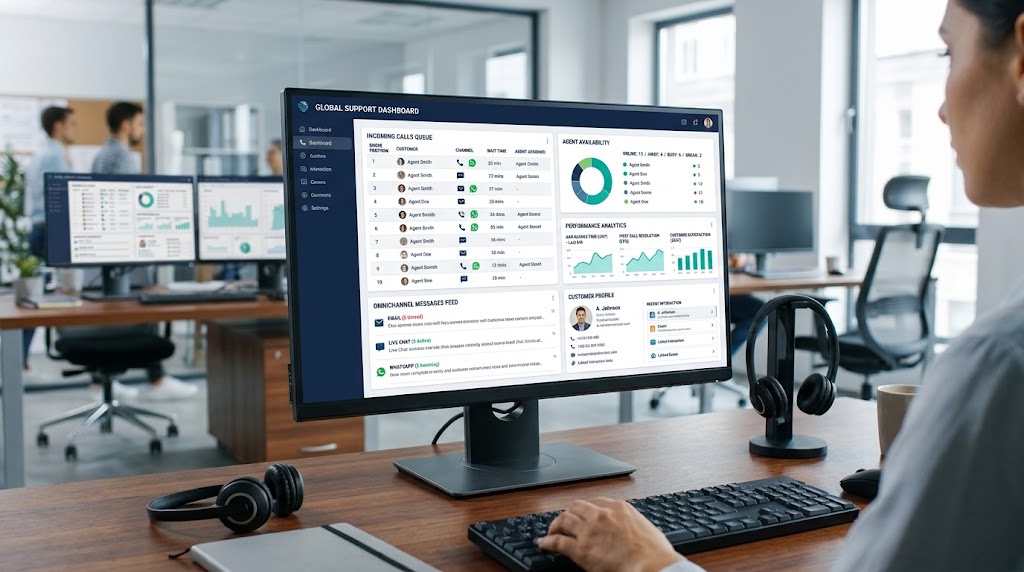
- Omnichannel communication: Helps agents manage interactions from channels such as voice, email, chat and messaging.
- Call recording and monitoring: Allows supervisors to review interactions for quality assurance and training.
- Workforce management: Helps managers forecast demand, schedule agents and monitor staffing levels.
- Reporting and analytics: Provides information about call volumes, waiting times, resolution rates and agent performance.
- AI and automation: Supports tasks such as automated responses, interaction summaries, agent assistance and customer self-service.
Not every platform includes all these capabilities in its standard package. Some require additional licences, integrations or third-party services.
15 Contact Center Software Solutions to Consider in 2026
The platforms below are not presented as a performance ranking. They serve different business sizes, industries and technical requirements. Some are comprehensive enterprise platforms, while others are locally offered hosted services or tools that require integration with existing systems.
1. MTN Business CCaaS
Best suited for: Nigerian businesses looking for a locally offered cloud contact center service.
MTN Business provides Contact Center as a Service (CCaaS), allowing organisations to manage customer interactions through a cloud-based platform rather than maintaining all the required contact center infrastructure themselves.
Its advertised capabilities include multilevel IVR, skill-based routing, automatic call distribution, real-time analytics and quality analysis.
For Nigerian businesses, a major consideration is the opportunity to discuss the contact center service alongside MTN’s telecommunications infrastructure. Businesses should still confirm the available channels, implementation requirements, service level agreements and pricing for their specific deployment.
Key features:
- Multilevel IVR
- Skill-based call routing
- Automatic call distribution
- Real-time analytics and reporting
- Quality analysis
- Cloud-based deployment
Website: MTN Business CCaaS
2. Airtel Hosted Contact Center
Best suited for: Nigerian organisations seeking a hosted contact center with telecommunications and software services from one provider.
Airtel Business offers a Hosted Contact Center service through Airtel IQ. The platform is designed to help businesses manage customer interactions without having to independently maintain all the underlying contact center infrastructure.
Its advertised capabilities include a web-based agent workspace, outbound dialing, real-time dashboards and historical reporting. Airtel also highlights bundled pricing and a unified service level agreement covering network and application layers.
This may be worth considering for organisations that want to discuss connectivity and contact center requirements with the same provider.
Before choosing the service, confirm supported communication channels, integrations, call charges, capacity and the terms of the service agreement.
Key features:
- Web-based agent workspace
- Outbound dialing
- Real-time dashboards
- Historical reporting
- Hosted deployment
- Bundled pricing options
Website: Airtel Hosted Contact Center
3. Genesys Cloud CX
Best suited for: Large organisations managing complex customer journeys across multiple channels.
Genesys Cloud CX is a cloud-based contact center platform designed to bring customer engagement, workforce management, analytics and AI capabilities together.
It supports voice and digital interactions, including messaging and email, with tools for routing customer enquiries and managing agent activities.
One of its major strengths is its broader customer experience management approach. Organisations can use it to coordinate interactions across departments and communication channels rather than treating each customer conversation separately.
Genesys is particularly relevant to organisations with established customer service operations and more complex routing or reporting requirements.
Key features:
- Omnichannel customer engagement
- Intelligent routing
- IVR and self-service
- Workforce management
- Quality management and analytics
- AI-powered agent assistance
Website: Genesys Cloud
4. NiCE CXone
Best suited for: Large contact centers requiring advanced workforce engagement and customer experience management.
NiCE CXone is an enterprise contact center platform that combines customer interaction management with workforce engagement capabilities.
It is designed to help organisations manage conversations across communication channels while monitoring service quality and operational performance.
Its broader workforce management capabilities are useful for businesses that need to forecast customer demand, plan agent schedules, evaluate interactions and improve service delivery.
Businesses considering NiCE should assess the specific modules they need because available capabilities and licensing can vary by package.
Key features:
- Omnichannel routing
- Workforce management
- Interaction recording
- Quality management
- Analytics and reporting
- AI-supported customer service
Website: NiCE CXone
5. Five9 Genius CX Platform
Best suited for: Businesses looking for a cloud contact center platform with automation and workforce optimisation capabilities.
Five9 provides cloud-based contact center technology through its Genius CX Platform. The platform brings together customer engagement, routing, analytics, automation and AI capabilities.
It supports voice and digital channels, helping agents manage customer interactions through a connected environment. Its tools can also support outbound campaigns, agent assistance and quality evaluation.
Five9 may be relevant to organisations looking to modernise an existing call center or build a cloud-based customer service operation.
Before purchasing, businesses should confirm the availability of their required telephone numbers, carrier arrangements and deployment support in Nigeria.
Key features:
- Voice and digital engagement
- Intelligent interaction routing
- Outbound dialling
- AI-powered agent assistance
- Quality management
- Analytics and workforce optimisation
Website: Five9
6. Talkdesk
Best suited for: Businesses seeking a cloud contact center platform with customer experience and automation tools.
Talkdesk provides cloud-based contact center solutions designed to help businesses manage customer conversations and improve service operations.
Its platform supports customer engagement, intelligent routing, analytics and integrations with business applications. It also provides tools for automating parts of the customer service process.
For Nigerian businesses, telephone number coverage should be checked carefully. Talkdesk publishes international phone number coverage information, but businesses should confirm the exact number types, documentation requirements and calling capabilities available to their account.
Key features:
- Cloud-based contact center
- Omnichannel engagement
- Intelligent routing
- Reporting and analytics
- CRM integrations
- AI and automation capabilities
Website: Talkdesk
7. Avaya Experience Platform
Best suited for: Established organisations with complex communication infrastructure and contact center requirements.
Avaya Experience Platform is the current platform name to consider instead of the older Avaya OneCloud branding.
It provides customer experience and contact center capabilities for organisations that need to manage customer interactions across communication channels.
Avaya is particularly relevant to businesses with existing enterprise telephony infrastructure or those considering a transition towards cloud-based customer engagement.
The deployment model, available features and integration options should be confirmed with Avaya or an authorised provider before implementation.
Key features:
- Customer interaction management
- Voice and digital engagement capabilities
- Contact routing
- Analytics and reporting
- Integration with business communication systems
- Cloud and hybrid deployment options, depending on the offering
Website: Avaya
8. 8×8 Contact Center
Best suited for: Businesses that want contact center functionality alongside business communications.
8×8 Contact Center is part of the company’s broader communications platform. It is designed to help customer service teams manage customer interactions while connecting contact center operations with other business communication tools.
Its capabilities include interaction routing, analytics and integrations with business applications.
Organisations should assess the specific contact center package rather than assuming that every feature is included with a standard 8×8 communications subscription.
Nigerian businesses should also verify local number support, call routing arrangements and service availability before committing.
Key features:
- Contact center routing
- Voice and digital engagement
- Analytics and reporting
- CRM integrations
- Business communications integration
- Cloud-based deployment
Website: 8×8
9. RingCentral RingCX
Best suited for: Organisations that want customer engagement and business communications within a connected platform.
RingCentral RingCX is a cloud-based customer experience platform designed to help businesses manage customer interactions and contact center activities.
It forms part of RingCentral’s wider communications ecosystem, making it worth considering for organisations already using its business communication services.
Businesses evaluating RingCX should examine its supported channels, integrations, reporting capabilities and the level of customisation available for their operations.
Nigerian buyers should request confirmation of local telephony arrangements and the availability of the specific services they intend to use.
Key features:
- Cloud contact center capabilities
- Customer interaction routing
- Digital engagement
- Analytics and reporting
- Integration with business applications
- Connection to RingCentral communications services
Website: RingCentral RingCX
10. Zoom Contact Center
Best suited for: Businesses already using Zoom that want to extend their communication environment into customer service.
Zoom Contact Center is a cloud-based contact center solution that brings customer engagement capabilities into Zoom’s wider communications ecosystem.
It is designed to support customer interactions across voice and digital channels, with tools for managing agents, routing engagements and monitoring performance.
Its connection to the wider Zoom environment may be useful for organisations that already rely on Zoom for meetings and business communication.
Businesses should verify the availability of required telephony services, integrations and licensing in their target market.
Key features:
- Voice and digital customer engagement
- Interaction routing
- Agent workspace
- Reporting and analytics
- Integration with Zoom services
- AI-supported capabilities
Website: Zoom Contact Center
11. Amazon Connect
Best suited for: Businesses with technical teams that want a flexible, cloud-based contact center built around AWS services.
Amazon Connect is a cloud contact center service within Amazon Web Services. It allows organisations to configure customer service workflows, manage interactions and connect contact center operations with other AWS services.
Its flexibility makes it suitable for organisations that want to build customised customer service experiences. However, implementation may require technical expertise, particularly when integrating the platform with existing applications and business processes.
For Nigerian businesses, telephone number availability and regional deployment requirements should be checked before implementation. AWS documentation and account restrictions determine which numbers can be obtained in particular regions.
Key features:
- Cloud-based contact center infrastructure
- IVR and call flows
- Contact routing
- Agent workspace
- Integration with AWS services
- Analytics and automation
Website: Amazon Connect
12. Cisco Webex Contact Center
Best suited for: Organisations with enterprise communication infrastructure and complex customer service requirements.
Cisco Webex Contact Center is a cloud-based platform designed to help organisations manage customer interactions across voice and digital channels.
It provides tools for routing interactions, managing agents and monitoring contact center performance. It may be particularly relevant to organisations already using Cisco networking, collaboration or communication technologies.
Cisco publishes country availability information for its contact center services. Nigerian businesses should still confirm the exact services, telephony arrangements and implementation options available to them.
Key features:
- Omnichannel customer engagement
- Intelligent routing
- Agent desktop
- Analytics and reporting
- Integration with Cisco collaboration services
- Cloud-based contact center management
Website: Cisco Webex Contact Center
13. Microsoft Dynamics 365 Contact Center
Best suited for: Organisations that use Microsoft business applications and want customer service operations connected to their existing systems.
Microsoft Dynamics 365 Contact Center is designed to connect customer service interactions with business data and customer relationship management workflows.
Its capabilities include customer engagement, routing, agent assistance and integration with the broader Microsoft ecosystem.
For organisations already using Dynamics 365, Microsoft Teams or other Microsoft business applications, this may provide a more connected environment for managing customer service.
Businesses should verify regional availability, licensing and telephony requirements before choosing it for a Nigerian deployment.
Key features:
- Customer engagement management
- Omnichannel routing
- Integration with Dynamics 365
- AI-supported agent assistance
- Analytics and reporting
- Microsoft ecosystem integration
Website: Microsoft Dynamics 365 Contact Center
14. Salesforce Service Cloud Voice
Best suited for: Organisations that use Salesforce and want voice interactions connected to their customer service records.
Salesforce Service Cloud Voice connects telephone conversations with the Salesforce Service Cloud environment. It helps agents access customer information while handling voice interactions and managing service cases.
It is important to understand that Service Cloud Voice is not simply a standalone contact center platform. Its implementation involves Salesforce Service Cloud and supported telephony or partner solutions.
For businesses already using Salesforce, this integration can help reduce the separation between telephone support and customer relationship management.
Key features:
- Voice integration with Salesforce Service Cloud
- Customer information during calls
- Case management
- Agent productivity tools
- Interaction data and reporting
- Integration with Salesforce workflows
Website: Salesforce Service Cloud Voice
15. Sprinklr Service
Best suited for: Large organisations managing customer service across social media and multiple digital channels.
Sprinklr Service is a customer experience management platform designed to help organisations manage customer interactions across digital channels.
It is particularly relevant to businesses that receive a large volume of customer enquiries, complaints and feedback through social media and messaging platforms.
Its capabilities extend beyond traditional telephone-based contact center operations, making it useful for organisations that want to bring digital customer service activities into a more coordinated environment.
Businesses should assess its supported channels, integrations and licensing requirements based on their specific needs.
Key features:
- Social customer service management
- Digital customer engagement
- Customer interaction management
- Analytics and reporting
- Workflow automation
- AI-supported customer service
Website: Sprinklr Service
Contact Center Software Comparison Table
The following table summarises the primary focus of each solution. It is intended as a starting point for evaluation, not a substitute for a technical demonstration or vendor assessment.
| Software | Primary focus | Suitable for |
|---|---|---|
| MTN Business CCaaS | Locally offered cloud contact center | Nigerian businesses |
| Airtel Hosted Contact Center | Hosted contact center and connectivity | Nigerian businesses |
| Genesys Cloud CX | Enterprise omnichannel customer experience | Large organisations |
| NiCE CXone | Contact center and workforce engagement | Enterprise contact centers |
| Five9 Genius CX | Cloud contact center and AI | Growing and large organisations |
| Talkdesk | Cloud contact center | Customer service teams |
| Avaya Experience Platform | Enterprise customer experience | Established organisations |
| 8×8 Contact Center | Contact center and communications | Businesses using 8×8 services |
| RingCentral RingCX | Cloud customer engagement | Businesses using RingCentral |
| Zoom Contact Center | Customer engagement and communications | Businesses using Zoom |
| Amazon Connect | Customisable cloud contact center | Technically equipped organisations |
| Cisco Webex Contact Center | Enterprise customer engagement | Cisco environments |
| Microsoft Dynamics 365 Contact Center | CRM-connected customer service | Microsoft environments |
| Salesforce Service Cloud Voice | CRM-integrated voice support | Salesforce users |
| Sprinklr Service | Digital and social customer service | Large digital service teams |
What Nigerian Businesses Should Consider Before Choosing Contact Center Software
A contact center platform may have impressive features but still be unsuitable for a business if its telephony arrangements, costs or implementation requirements do not match the local operating environment.
Before making a decision, Nigerian businesses should evaluate the following factors.
1. Local Telephone Number Availability
Confirm whether the provider can supply Nigerian telephone numbers for the type of service required.
Some platforms support international customers but may not offer Nigerian local, mobile or toll-free numbers directly. Others may require a separate telecommunications provider or SIP trunk connection.
Ask the vendor:
- Can we obtain Nigerian telephone numbers?
- Can customers call these numbers from local networks?
- Are inbound and outbound calls supported?
- Can the platform connect to our existing SIP trunk provider?
- Are there additional number rental or call charges?
Do not assume that a provider’s international availability automatically means that all Nigerian telephony services are supported.
2. Total Cost of Ownership
The advertised subscription price is only one part of the cost of running a contact center.
Businesses should request a breakdown of:
- Per-agent licensing fees
- Telephone number rental
- Inbound and outbound call charges
- International calling rates
- Additional communication channels
- Integration and implementation fees
- Training and technical support
- Optional AI and analytics modules
For Nigerian businesses paying international vendors, exchange rate changes and payment arrangements should also be considered.
3. Internet Connectivity and Reliability
Cloud contact center software depends on reliable internet connectivity. Poor connectivity can affect voice quality, agent availability and customer experience.
Before implementation, assess internet capacity, network stability and backup connectivity arrangements.
Businesses operating larger contact centers should also consider network monitoring and quality of service requirements.
4. Data Protection and Security
Customer interactions may contain personal information, financial details and other sensitive business data.
Businesses should understand where customer information is stored, who can access recordings and how the platform handles data protection.
Review the provider’s security documentation, access controls, data retention policies and contractual responsibilities. Nigerian organisations should also consider their obligations under the Nigeria Data Protection Act 2023 and applicable regulatory guidance.
Official reference: Nigeria Data Protection Commission.
5. Integration With Existing Business Systems
Contact center software should work with the systems a business already uses.
Depending on the organisation, useful integrations may include:
- Customer Relationship Management (CRM) systems
- Enterprise Resource Planning (ERP) software
- Helpdesk and ticketing platforms
- Customer databases
- Payment and billing systems
- Business messaging tools
For example, integrating a contact center with a CRM can help agents access customer records during conversations instead of switching between separate applications.
6. Technical Support and Implementation
A contact center deployment involves more than purchasing software. Businesses may need help with network configuration, SIP trunking, IVR design, agent setup, integrations and staff training.
Ask the provider who will handle implementation, what support channels are available, and how quickly technical issues are addressed.
How to Choose the Right Contact Center Software
There is no single platform that is best for every organisation. The right choice depends on the size of the contact center, the communication channels required, the existing technology environment and the available budget.
Use these considerations to narrow down your options.
For businesses looking for a locally offered Nigerian service: Start by comparing MTN Business CCaaS and Airtel Hosted Contact Center. Request demonstrations and written details of their pricing, supported channels and service commitments.
For large enterprise contact centers: Consider platforms such as Genesys Cloud CX, NiCE CXone, Five9 and Avaya Experience Platform. Evaluate their routing, workforce management, analytics and integration capabilities.
For organisations already using a wider business technology ecosystem: Look at platforms that connect with your existing tools. Examples include Microsoft Dynamics 365 Contact Center, Salesforce Service Cloud Voice, Zoom Contact Center and RingCentral RingCX.
For businesses with technical teams: Amazon Connect may be worth evaluating if your organisation needs a flexible platform that can be configured around existing applications and AWS services.
Before selecting a solution, shortlist two or three providers and compare them using the same business requirements. This makes it easier to identify differences in functionality, cost and implementation complexity.
Frequently Asked Questions
What is the difference between call center and contact center software?
Call center software primarily manages telephone conversations between customers and agents. Contact center software supports a wider range of communication channels, including voice, email, live chat and messaging.
What is the best contact center software for small businesses?
The right solution depends on the number of agents, communication channels, budget and expected customer interaction volume. Smaller businesses should prioritise essential capabilities such as call routing, reporting, ease of use and predictable pricing rather than paying for enterprise features they may not need.
Can Nigerian businesses use cloud contact center software?
Yes. Nigerian businesses can use cloud contact center solutions, but they should verify telephone number availability, connectivity requirements, calling costs, data protection arrangements and technical support before deployment.
Does contact center software support WhatsApp?
Some contact center platforms support WhatsApp integration, allowing businesses to manage customer messages alongside other communication channels. However, availability may depend on the provider, subscription, WhatsApp Business Platform configuration and integration requirements.
Businesses should confirm whether WhatsApp is supported natively or through a third-party integration.
How does AI improve contact center operations?
AI can support contact center operations through automated customer responses, virtual agents, interaction summaries, agent assistance, speech analytics and quality evaluation.
These capabilities can help reduce repetitive work and provide supervisors with more information about customer interactions. However, the actual benefits depend on implementation, data quality and how the tools are used.
Conclusion
Choosing contact center software requires more than comparing feature lists. Businesses need to consider the communication channels they use, the number of agents they manage, their existing infrastructure and the level of support they require.
For Nigerian organisations, local telephone number availability, connectivity, call costs and implementation support are particularly important. A platform that works well for an international enterprise may not automatically be the most practical choice for a local business.
The best approach is to define your requirements, shortlist suitable providers and request demonstrations before making a decision.
Looking to improve how your business manages customer interactions? Explore SmartCloudContact’s contact center services or request a demo to discuss your communication requirements.